
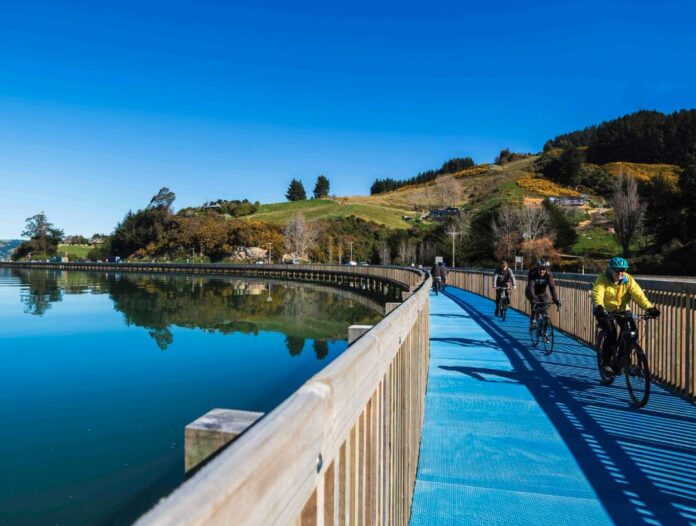
Dunedin City Council is inviting community feedback on a draft 30-year strategy that aims to make walking, wheeling and cycling a safe and attractive option for locals and visitors.
The draft Ōtepoti Pathways Strategy sets a long-term direction for improving connections across the city for everyday travel, recreation and tourism. It recognises that walking, wheeling and cycling are part of a resilient and efficient transport network that supports communities now and in the future as our city grows.
The draft Ōtepoti Pathways Strategy responds to NZTA co-funding requirements, coordinates citywide improvements by teams and stakeholders, and supports funding decisions.
The draft strategy has been shaped by Government and Council strategies, transport planning, community feedback, targeted stakeholder input and Council workshops.
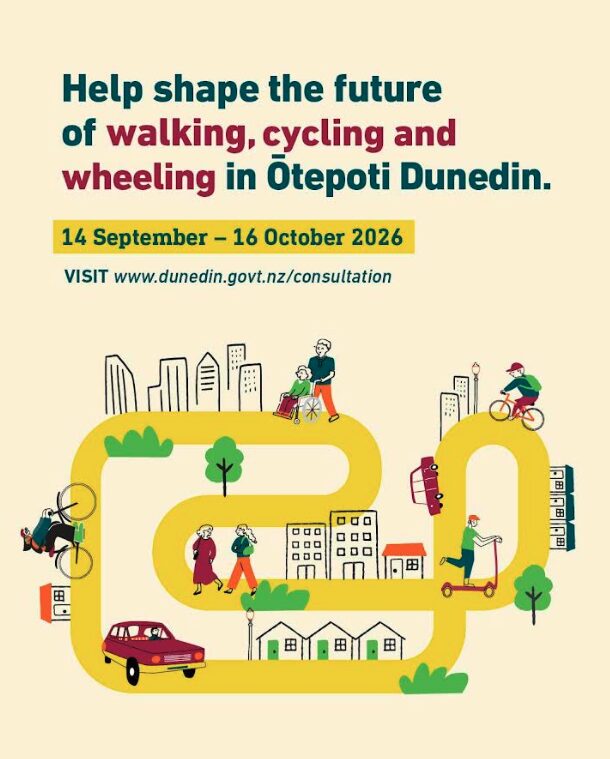
The 30-year vision is: ‘In Ōtepoti Dunedin, it is safe and easy for people of all ages and abilities to walk, cycle or wheel for everyday travel’. The Council says its vision is supported by four goals:
- Safety and accessibility
All people in Dunedin can travel safely and independently to where they need to go in their everyday life and when visiting destinations across the city.
- Choice and wellbeing
Our active transport system is safe, well-connected, attractive and easy to navigate, giving people a genuine choice to travel in ways that support their wellbeing and the environment.
- Economic prosperity and tourism
Our city has strong active transport connections to tracks, trails and key destinations, which will strengthen tourism and support local businesses and our economy.
- Traffic reliability and resilience
Our transport system continues to support reliable traffic flow while our city grows and is resilient to local and global disruptions.
Five priority areas have been identified where investment will be focused:
- Central City
- Hill Suburbs (Kaikorai, Māori Hill, Roslyn, Helensburgh, Wakari, Halfway Bush, Brockville)
- South Dunedin and Caversham
- Mosgiel
- Andersons Bay and Musselburgh.
These areas have been prioritised because of their population density, many schools and workplaces. They also enable travel to and from key visitor destinations, supporting economic development through tourism growth.
The strategy includes an investment hierarchy that outlines that closing gaps and connecting existing routes within identified priority areas are a priority. Aligning with other investment and development opportunities outside of priority areas is a second priority.
Future connections across the Dunedin region and city are shown on maps, with more detail provided within the five priority areas. These connections link key locations that could be improved for walking, cycling and wheeling over the next 30 years.
Following consultation, Council will consider feedback before deciding whether to adopt the final Ōtepoti Pathways Strategy.
If adopted and following decisions on the DCC’s 10 year plan 2027-2037, Council will continue to work with residents, property owners, businesses, mana whenua, community organisations and government agencies to advance walking and cycling projects and improvements.
Consultation opened yesterday, with the public invited to share their opinions and ideas through Currently consulting on.
More information about the draft Strategy can be found Ōtepoti Pathways Strategy.
