
Gisborne District Council is working alongside local forestry contractors and the Forest Industry Contractors Association (FICA) to develop practical guidance notes to help improve understanding and consistency in how forestry regulations are applied in Tairāwhiti.
The initiative is part of Council’s wider work to improve forestry consenting processes in Tairāwhiti.
Council Chief Executive, Nedine Thatcher Swann says involving contractors from the outset is important to ensure the guidance works in practice.
“Contractors are the ones working with forestry regulations and consent conditions every day, so their experience is valuable in helping us understand where greater clarity is needed,” she said.
“By bringing together their practical knowledge and Council’s regulatory expertise, we can develop guidance that reflects how forestry operations work on the ground while ensuring the requirements are understood and applied consistently.”
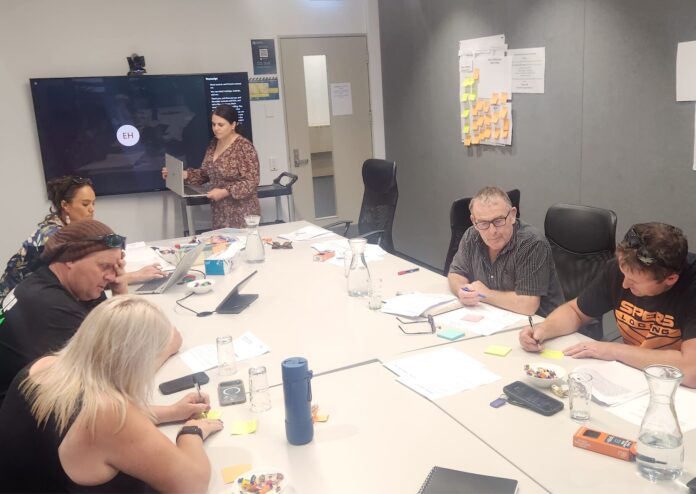
At a workshop held last week, Council staff and forestry contractors discussed regulatory requirements and existing consent conditions, including how they are interpreted and applied in practice.
Discussions covered harvest planning, earthworks, erosion and sediment control, slash management and working around waterways. Contractors shared examples from their day-to-day operations, highlighting the importance of earlier involvement in harvest planning and clear, consistent guidance when making decisions on site.
These insights will help shape practical guidance that contractors, forestry operators and Council staff can use to better understand forestry regulations and rules, how they should be interpreted and what activities are permitted or restricted. The guidance will also help clarify how consent conditions should be applied in practice and improve consistency across forestry operations.
The work will include reviewing the New Zealand Forest Owners Association’s existing forestry guidance manual and identifying where additional guidance specific to Tairāwhiti may be needed to reflect local conditions and regulatory requirements.
Ms Thatcher Swann says Council is committed to making the process as straightforward as possible for those working in the industry.
“We want to make it easier for contractors to navigate the requirements, reduce unnecessary uncertainty and give them greater confidence when making decisions on site.”
“We’re actively looking at where improvements can be made and working with the industry to develop practical solutions, while maintaining the environmental protections our communities expect,” she said.
FICA Chief Executive, Rowan Struthers says the engagement is a positive opportunity for contractors to contribute directly to developing guidance that works for the industry.
“FICA welcomes the positive and constructive engagement with Gisborne District Council and strongly supports the involvement of contractors in developing practical guidance, as those working on the ground every day bring essential operational experience, but ultimately the success of this initiative will be measured by whether it delivers clearer expectations, greater consistency, and tangible improvements in outcomes because, as the saying goes, the proof will be in the pudding,” said Mr Struthers.
Local contractors who attended the workshop included Blackstump, Dewes Contractors, Speirs Logging, Kuru Contracting and Lumberjack Logging. Three other contractors were unable to attend but have expressed interest in future discussions, with FICA supporting the ongoing engagement between Council and the industry.
Council says it will continue working with FICA and local contractors with further engagement proposed for early 2027 to progress the work.
Read FICA’s story on the workshop, Positive Start to Forestry Contractor–GDC Engagement | Forest Industry Contractors Association (FICA).
