
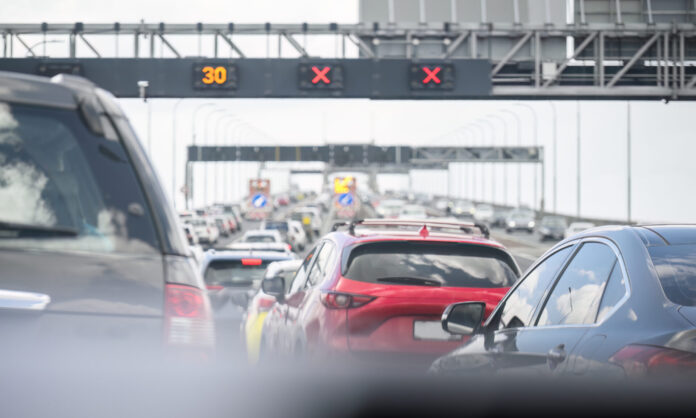
Auckland Council is asking Aucklanders to help shape how time of use charging could help tackle traffic congestion and keep the city moving.
Time of use charging – a charge to use certain roads when they are busiest – is used in cities around the world to reduce congestion and improve travel times.
Feedback is now open on three options covering the city centre, city fringe and city centre plus core motorways.
Chair of Auckland Council’s Transport and Infrastructure Delivery Committee, Councillor Andy Baker, says bringing it to Auckland could be the game changer the city needs to get on top of congestion.
“Most Aucklanders know the frustration of sitting in bumper-to-bumper traffic, watching valuable time slip away, when they could be spending that time somewhere else,” said Cr Baker.
“Time of use charging is one way we can start to turn the tide on traffic, alongside major public transport projects like the CRL, new busways and more frequent services.
“Using it to make the most of our transport network could lead to more reliable journeys, less traffic jams, and giving people up to 20 minutes back in their day, without needing to build new roads.
“We know people will have different views and that’s exactly why we’re asking for feedback at this early stage. By having your say, you’ll help influence how time of use charging could work for Auckland in the future,” he says.
Auckland’s regular commuters currently lose an average of 66 hours each year sitting in traffic. Without intervention, the Council says this figure is predicted to get worse in coming years.
Cities that introduce time of use charging typically see congestion fall by around 20%. Data suggests Auckland could see similar results. The Council says conditions around the charging areas could become comparable to school holidays.
Data shows that most drivers (93 – 97%) would not pay the charge under the council’s three shortlisted options, but around one third would get a quicker journey. The options have been chosen for their good public transport links, impact on congestion far beyond the charged areas, and value for money in terms of time savings, reliable journey times, business productivity and other benefits.
The options cover the city centre, city fringe and city centre plus parts of core motorways:
Option A covers the city centre. It could reduce congestion by around 4 per cent across the isthmus and lower north shore, save drivers an average of 2.5 minutes in peak morning traffic and improve journeys for one in four uncharged drivers.
Option B covers the city fringe. It could reduce congestion by 6 per cent across the isthmus and lower north shore, save drivers an average of four minutes in peak morning traffic and improve journeys for one in three uncharged drivers.
Option C covers the city centre and core motorways. It could reduce congestion by around 28 per cent across the isthmus and lower north shore, save drivers an average of seven minutes per trip and up to ten minutes on longer journeys, and improve journeys for one in three uncharged drivers.
The Council said no final decisions have been made on charge amounts, or time of day implementation. Current modelling is based on peak morning traffic times (7am–10am) and example charges of $2–$5.
Share your feedback from now until 11 December.
Visit AK Have Your Say to give feedback online, find out more, and see events and webinars to attend.
