
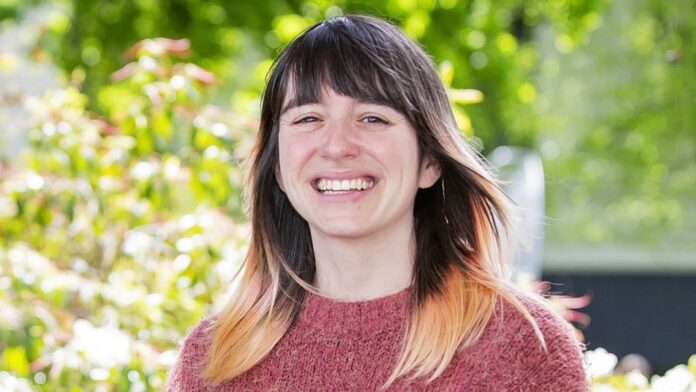
University of Auckland PhD student, Sandra Gómez-Gálvez, has been selected as the only New Zealand doctoral student in this year’s prestigious L’Oréal-UNESCO For Women in Science mentoring programme.
The 29-year-old Spanish-born computer science student (pictured) is being paired with a mathematician and game theorist based in Australia for expert advice and guidance.
“As an international student and an immigrant, being awarded this opportunity carries profound meaning for me,” says Ms Gómez-Gálvez.
“It gives me the confidence to know that I can truly thrive in New Zealand and contribute meaningfully to science and the country’s future.”
As a schoolgirl, she says she was never encouraged to pursue science, but a talent for maths sent her in that direction, and now she’s deep in artificial intelligence.
Ms Gómez-Gálvez was raised in El Ruedo, a fortress-like government housing complex in Madrid for low-income families.
“Living in El Ruedo is challenging, you see and learn a reality that not everyone knows,” she says.
“Your study is amid constant noise and music – there’s an extra layer of difficulty. But I’m so grateful that my family had that home.”
Without money behind her, Ms Gómez-Gálvez has made her way by winning awards and scholarships, such as the one which brought her to Auckland.
In her academic life to date, she’s worked on AI to guide physical rehabilitation, algorithms to conquer the evillest Sudoku, and systems to prevent accidents in crowds.
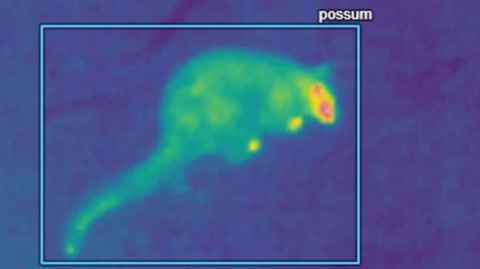
For her PhD, she is grappling with rats, rabbits, possums, stoats, and wallabies as one of the scientists focused on wiping out predators killing Aotearoa’s native species.
She’s working on AI to reliably identify predators and distinguish them from non-predators in images from cameras in the wild. The research may have applications in areas such as healthcare, climate forecasting and environmental monitoring.
Always ready to put herself out there, Ms Gómez-Gálvez overcame her fear of speaking English in public to be a finalist in the University’s Three-Minute Thesis (3MT) competition in 2024.
She said she’s sometimes frustrated about not communicating her science with enough confidence and conviction but hopes to get a significant boost from the one-on-one mentoring and workshops in the six-month Women in Science programme.
Ms Gómez-Gálvez’s PhD is funded by the Biosecurity Technology Spearhead research project and a University of Auckland Doctoral Scholarship Extension. She is supervised by Dr Katerina Taškova and Professor Gillian Dobbie.
