

University of Auckland researchers have warned artificial intelligence may fall short of delivering better pain care for older people unless tools are designed and tested specifically for them.
A new study has found nearly 76% of artificial intelligence tools developed to assess and manage pain in older adults are still at the proof-of-concept stage.
The study reviewed the global use of AI in pain assessment and management. AI can analyse facial expressions to help identify pain in people who cannot easily communicate their symptoms, including those living with dementia or recovering from a stroke. Automated facial analysis and machine learning can also help track symptoms and tailor treatment.
The study’s lead author, Rhoda Ilenwabor, a PhD candidate at Auckland University, says older people risk being overlooked as AI-powered healthcare tools become more common.
While research in the field is expanding rapidly, few tools are ready for routine use and many have not been developed specifically for older adults, Ms Ilenwabor says.
The study involved a review of existing research, bringing together evidence from 96 previously published studies on AI and pain care for older adults. It found that while nearly 76% of AI tools reviewed were still in the early stages of development, only 5.5% were considered ready for integration into clinical practice.
None of the studies reviewed had been conducted in New Zealand.
Most systems used machine learning, a type of AI, to identify and predict pain using information such as facial expressions, voice, images, video and other characteristics.
“Pain in older adults is often invisible, can be difficult to recognise, and is not always adequately assessed or treated,” said Ms Ilenwabor.
“AI may eventually help, but only if these tools are developed and tested with older adults, not simply adapted for them later.”
Two-thirds of the studies reviewed included mixed-age populations rather than focusing specifically on older adults, raising concerns about how well the tools would work for the group most likely to experience chronic pain.
The findings also raise questions about whether AI tools developed overseas would perform equally well for New Zealand’s diverse population, including Māori and Pacific communities.
The review highlights a growing disconnect between the rapid development of AI tools for pain assessment and management and the number ready for use in healthcare settings.
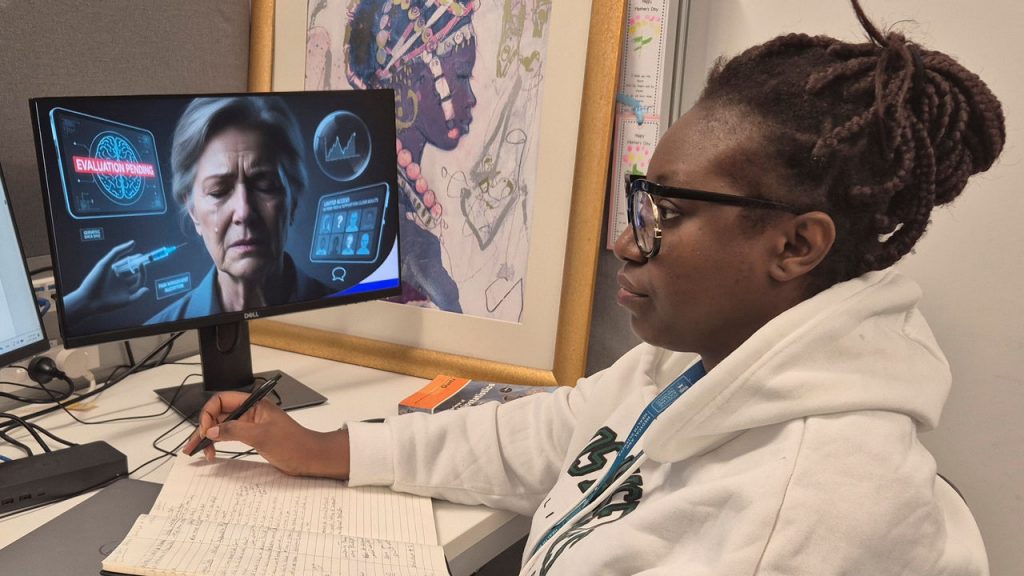
Ms Ilenwabor says AI should complement, rather than replace, healthcare professionals.
“AI can support pain care for older adults, but it is not there to replace clinical judgement. These tools need to be clinically validated, equitable and developed with older adults from the beginning.”
The research recommends involving older people and healthcare professionals in developing and testing AI tools before they are introduced into routine care.
Her next study will explore whether New Zealand healthcare professionals see a role for AI in assessing and managing pain in older people.
The paper, ‘Artificial intelligence in pain assessment and management for older adults: A scoping review’, was co-authored by School of Pharmacy Associate Professor Mohammed Mohammed and Professor Nataly Martini. Read the study.
