
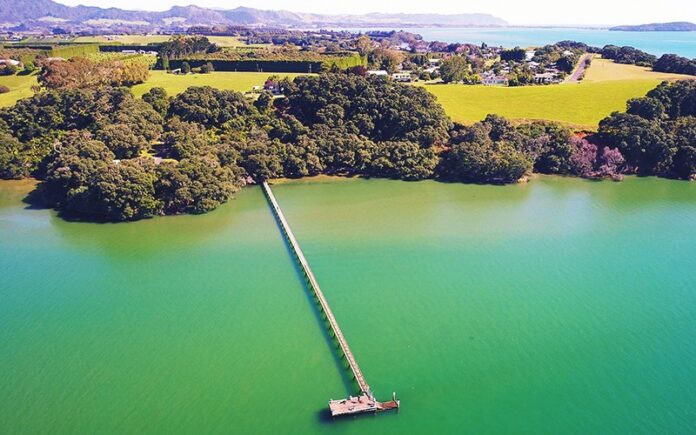
A cultural concept plan has been adopted for Kauri Point Historic Reserve, one of New Zealand’s most significant archaeological pā sites, marking a major step forward in a long-held vision to honour its past and shape its future.
Western Bay of Plenty District Council says the site represents centuries of continuous Māori occupation and is considered highly significant to Ngāi Tamawhariua, Ngāti Te Wai and Te Whanau A Tauwhao.
Archaeological evidence shows the area was occupied from at least 1200 AD, with cultural layers documenting the transition from early Māori settlements through periods of fortification and tribal conflicts.
Developed in partnership between the Council and the Kauri Point Te Kō Rōpu hapū group, the cultural concept plan reflects a shared commitment to kaitiakitanga (guardianship and care for the land) and is focused on protecting the heritage of the site, restoring the natural environment, and ensuring it remains a place for everyone to enjoy, the Council said in a statement.
The project, with a high-level estimate of around $1.2 million,will be completed in stages in line with available funding, with Council allocating $453,306 across the 2026/27 and 2027/28 financial years, and the remaining funding referred to its 2027–37 Long Term Plan for consideration, alongside efforts to secure external funding.
The plan builds on the foundations of the 2010 Cultural Assessment and the Kauri Point Historic Reserve Concept Development Plan, and includes both the reserve and surrounding significant areas, including Ōwarau Pā, Ōwarau Swamp, Ōwarau Springs, South Beach, Atea (Upper Level Pā), South Lookout, North Lookout, North Beach, and Rimu Gardens.
Storytelling through pou, waharoa and interpretation panels, restoring native ecosystems, protecting pā sites and creating learning opportunities are all included in the plan.
“The history of this place runs deep for tangata whenua,” says Reon Tuanau, of Otawhiwhi Marae, speaking on behalf of the Kauri Point Te Kō Rōpu hapū group.
“We’re doing this kaupapa to honour our ancestors as best we can, strengthen ourselves and pave the way for the next generations.
“This has been a really good example of partnership between Council and mana whenua.”
The reserve contains three pā sites of significance, spanning different periods of Māori occupation, he explains.
“Early occupation is evidenced by terraces, which were common for that time, through to the introduction of ring ditch pā. It really does take us on a journey through the many generations.”
In the 1960s, the University of Auckland carried out archaeological surveys and excavations at the site, uncovering significant taonga, including a large collection of intricately carved heru (combs), providing rare insights into Māori artistic traditions spanning multiple centuries.
Some of these taonga were later included in the Te Māori exhibition, which toured internationally in the 1980s.
Council’s Reserves and Facilities Manager, Peter Watson says the vision builds on the successful collaboration that the Te Kō Rōpu hapū group had with the New Zealand Transport Agency (NZTA) involving the recent establishment of pou and cultural artworks along State Highway 2.
“It’s really important for tangata whenua to see their history present in their rohe (district). At its heart, it’s about partnership, working together with mana whenua to protect and look after the land and its stories,” Mr Watson said.
“It’s about taking a long-term view, making sure decisions today continue to respect and strengthen this special place into the future.”
For more information, visit: yourplace.westernbay.govt.nz/kauri-point-historic-reserve.
