
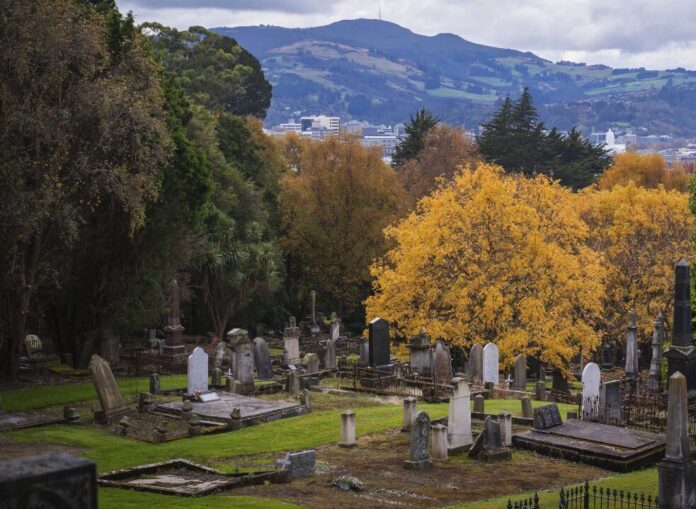
Dunedin City Council is continuing to encourage members of the public to contribute to its research project into unmarked graves.
The Council received a significant Government grant in June to research unmarked graves of people who died while in institutional care in the Dunedin area.
The Department of Internal Affairs, as part of its Survivor Support and Recognition Fund, allocated $188,707 to help honour those who died in care institutions.
As part of its research and engagement, Council has been inviting members of the public and interested parties to provide relevant information, including via an online form.
Since first calling for information in June, the Council has received dozens of submissions, which have helped in the process to better understand the number of patient deaths at the Seacliff Group of psychiatric hospitals and identify their resting places, including potential unmarked graves.
The Dunedin region has a long history of large‑scale institutional care, including psychiatric hospitals and psychopaedic facilities such as Seacliff Lunatic Asylum, the Dunedin Lunatic Asylum and Cherry Farm, as well as welfare homes and church-run institutions. Many of these operated during periods when people who died in care were buried in local cemeteries, often in ‘pauper’s plots’ or unmarked graves, the Council said in a statement.
The Department of Internal Affairs funding has enabled the Council to contract an archaeologist experienced in identifying unmarked graves and burial sites.
Initial steps in the project have included archival research and consultation with knowledge holders, creating a verified list of deaths and burial locations as well as physically identifying potential burial locations of former patients.
Project Lead, Council Parks Planning Manager, John Brenkley says the archival research is basically completed, with a few small exceptions, and analysis of the data is progressing well.
“However, our consultation process is ongoing, so we welcome further submissions from interested parties, particularly anyone who believes they have connections to former patients of these institutions,” said Mr Brenkley.
“We are particularly interested in receiving feedback on how to memorialise those who died in care.”
Next steps include a review of historical aerial photographs and cemetery maps. A Council-contracted archaeologist will also be conducting ground-penetrating radar surveys of potential unmarked grave sites this month.
“The ultimate goal of the project is to develop an appropriate memorial to recognise former patients who passed away in care. This will involve consultation with interested whanau, former staff and other relevant stakeholders,” Mr Brenkley says.
The Council welcomes feedback from all interested parties: www.dunedin.govt.nz/unmarked-graves-project.
