
Flushable smart sensors designed by Auckland engineers could be set to change how underground sewage faults are detected – and they cost less than a cup of coffee.
Dr Wei-Qin Zhuang and Dr Colin Whittaker from the Department of Civil and Environmental Engineering, along with a wider team of engineers, have invented biodegradable ‘smart sensors’ that can detect misconnected or blocked sewage pipes, using similar technology to how we might find missing car keys.
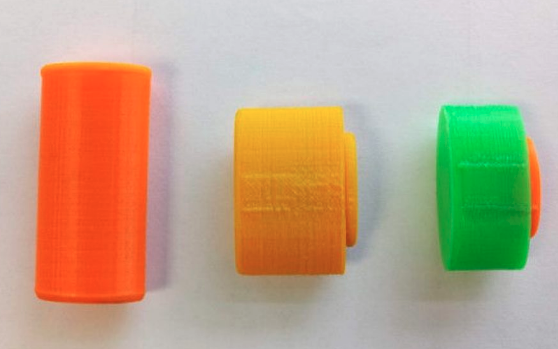
The sensors use ultra-high frequency radio frequency identification (UHF-RFID) to send out a radio signal that can be picked up and traced as it moves through underground sewer and stormwater networks.
They are flushable, battery-free, and no bigger than a cigarette lighter. Made from plant-based plastic, the sensors also float naturally, allowing them to travel safely through pipes while remaining easy to detect.
“Each sensor carries a unique code, so we know exactly where it was released from,” says Dr Zhuang.
“If it appears in the wrong pipe system, it immediately flags a faulty or illicit connection.”
Sewer cross-connections – where wastewater pipes are wrongly connected to stormwater networks – are particularly problematic, as they can result in untreated human waste ending up in Auckland’s marine and freshwater environments.
Illicit stormwater connections in sewer pipes can also significantly increase wastewater volumes at treatment plants during heavy rain, putting extra pressure on infrastructure.
“Detecting these connections is critical,” says Dr Zhuang.
“If we miss them, the environmental outcomes can be quite damaging.”
The smart sensors can also be used to detect blockages, including fatbergs – large masses of congealed fat and hygiene products that build up inside the sewer network and cause overflows.
There are existing methods for identifying blockages and cross-connections, such as dye testing, smoke testing and CCTV, but Dr Zhuang says these approaches can be time-consuming and labour-intensive.

The team has already completed two field trials with Auckland Council and Watercare at Browns Bay, where the sensors successfully detected an illicit connection in a newly built house.
“The sensors cost less than a cup of coffee to produce and with each one carrying a unique digital ID, our engineers could trace the fault back to the individual property,” says Dr Zhuang.
The technology is designed to be affordable and scalable, making it practical for widespread use across Auckland’s vast underground pipe network.
“There are about 8000-9000km of sewer pipes beneath our feet here in Auckland, roughly equal in length to a direct flight from Auckland to Tokyo,” he says.
“The vast majority of these pipes are separate sewers, which have independent sanitary sewer networks and stormwater networks. But there are still several hundred kilometres of so-called combined sewer pipes.”
Auckland Council has been identifying and phasing out these pipes, however underground assets are very expensive, so combined sewer replacement work takes time.
Luckily, the research is moving rapidly.
“We’ve developed a suite of these smart sensors, and so far, they’ve gone from an idea to successful field trials to real-life applications within a couple of years,” says Dr Zhuang.
“We’re now developing new sensors with Professor Kean Aw in the Department of Mechanical and Mechatronics Engineering to help digitalise Three Waters networks, supporting cleaner waterways and a more sustainable future.”