
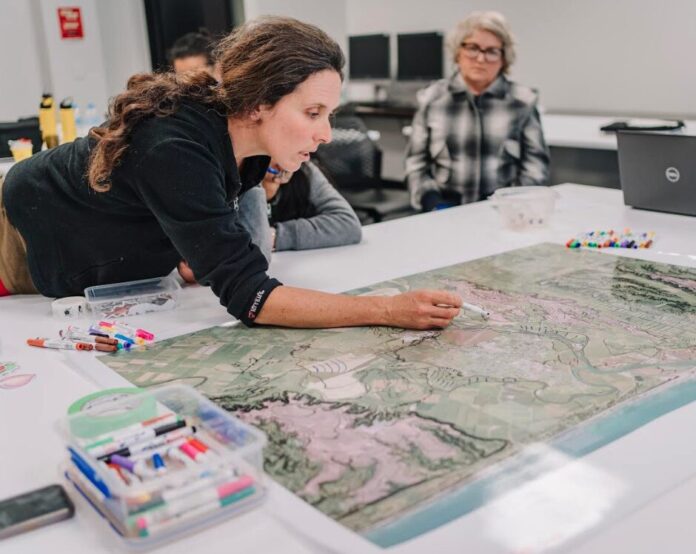
A research partnership between Ōpōtiki-based iwi, Te Whakatōhea, and Lincoln University has contributed evidence on climate adaptation to the Waitangi Tribunal in support of Ngāti Ngahere’s Wai 1884 claim within the wider Wai 1750 North-Eastern Bay of Plenty District Inquiry.
The evidence was presented by Lincoln University researchers Dr Shannon Davis and Dr Richard Morris from the University’s Centre of Excellence: Designing Future Productive Landscapes – both key members of the research partnership from its inception in 2022.
The partnership, gifted the name Tōhea Oranga Wānanga Whenua (hold onto health, learn from the land) by Te Whakatōhea, has grown from early work on kai sovereignty and spatial planning into a broader programme focused on climate adaptation and the long-term future for communities across the eastern Bay of Plenty region.
Presented at Te Rere Marae, the evidence drew directly from the body of research, focusing on the compound climate risks facing Ngāti Ngahere and the wider Ōpōtiki landscape. Rather than treating river flooding, sea level rise, coastal backwater effects, rising groundwater, drainage pressures and infrastructure vulnerability as separate problems to be tackled, the researchers argued that all these issues need to be understood as an interacting landscape system, within both dynamic and temporal scales.
As explained by Dr Morris, the Te Rere Marae itself clearly illustrates the multi-faceted challenge confronting the community.
“The marae already functions as an important refuge and community-support infrastructure and sits beside Ōpōtiki aerodrome, yet it is itself located immediately behind the Ōtara River stopbank within a vulnerable lowland landscape,” she said.
“The evidence we presented described this as a resilience paradox — a place relied upon during disruption must itself be able to continue functioning as environmental conditions change.”
The Tribunal evidence also placed contemporary climate vulnerability within the historical context of raupatu — the confiscation of Te Whakatōhea lands by the Crown in the 1860s. The researchers argued that climate change is acting on communities whose spatial choices were already constrained by historical land loss. Adaptation therefore involves more than identifying land outside mapped hazard zones; it also raises questions about who has the authority and opportunity to shape future settlement, infrastructure and land-use decisions.
That question is central to the Tōhea Oranga Wānanga Whenua partnership’s current Vision Mātauranga research — Ka Mate Kāinga Tahi Ka Ora Kāinga Rua (from adversity arises the opportunity for change), which examines long-term adaptation and planned relocation in Ōpōtiki through a Te Whakatōhea lens.
For Doctors Davis and Morris, the opportunity to provide expert evidence to the Waitangi Tribunal represented both an important milestone and a continuation of their research trajectory.
“Our relationship with Te Whakatōhea has been enduring, and we share a strong belief that this mahi will benefit Te Whakatōhea and their people, while also contributing to the wellbeing of all Aotearoa as more communities pursue strategies for increased resilience across land use, settlement and food planning,” Dr Davis said.
“The form and placement of many cities and settlements in Aotearoa New Zealand was done with little consideration of the challenges associated with the foundational ecological systems that underpin those landscapes. Urban forms were applied to the landscape, and for the past 100 years we have tried to control and manage nature to enable our desired land uses to persist in these places.
“This approach is changing as we learn to let landscape systems lead land use decision making. Ka Mate Kāinga Tahi Ka Ora Kāinga Rua is about looking at the opportunity of doing things differently and asking what coastal settlements in Aotearoa might like look like if led by indigenous knowledge of the landscape in which they are part of.”
Professor Te Kahautu Maxwell from University of Waikato, who is also an Adjunct Professor at Lincoln University, said: “Tohea Oranga Wānanga Whenua is a partnership underpinned by tikanga Māori and a commitment to conducting research with iwi in a culturally appropriate and respectful manner.
“The partnership recognises the integrity of different knowledge systems, which may align in some areas and differ in others. Where differences arise, wānanga provides the process through which knowledge is shared, questioned and investigated, and agreement is negotiated. Our research is therefore undertaken collaboratively, ensuring that iwi knowledge, priorities and aspirations remain central throughout the research process.”
In its early days, the Tōhea Oranga Wānanga Whenua research partnership focused on kai sovereignty and spatial planning, including how māra and kai production could be integrated into lived environments, but its focus broadened as climate change emerged through the work itself.
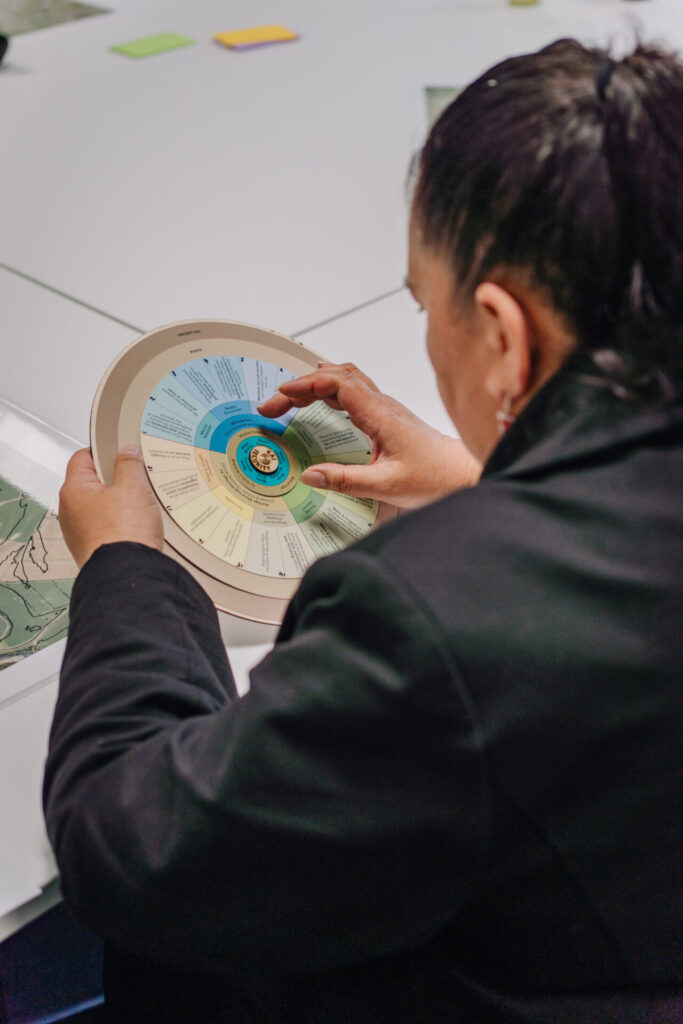
“We did not begin with climate change. We began with kai sovereignty and whenua planning, but climate change increasingly became the condition connecting those conversations — from where food can be grown, to how groundwater and flooding affect land capability, to where people and infrastructure can persist over the long term,” said Dr Davis.
The Te Whakatōhea–Lincoln University research partnership has received support through the Te Pūnaha Hihiko: Vision Mātauranga Capability Fund, the Health Research Council and the Ministry for Primary Industries Māori Agribusiness Climate Programme.
